

OmoiStationA memory that files itself.
You send yourself links all day and lose almost all of them, because filing is a chore nobody does. Share something to Omoi Station and forget about it. It works out what the thing is, connects it to your related saves, and brings the right things back to you later.
No folders, no tags, no inbox, no review queue, and nothing to configure.
iPhone and iPad · iOS 26 or later · open source under the MIT licence
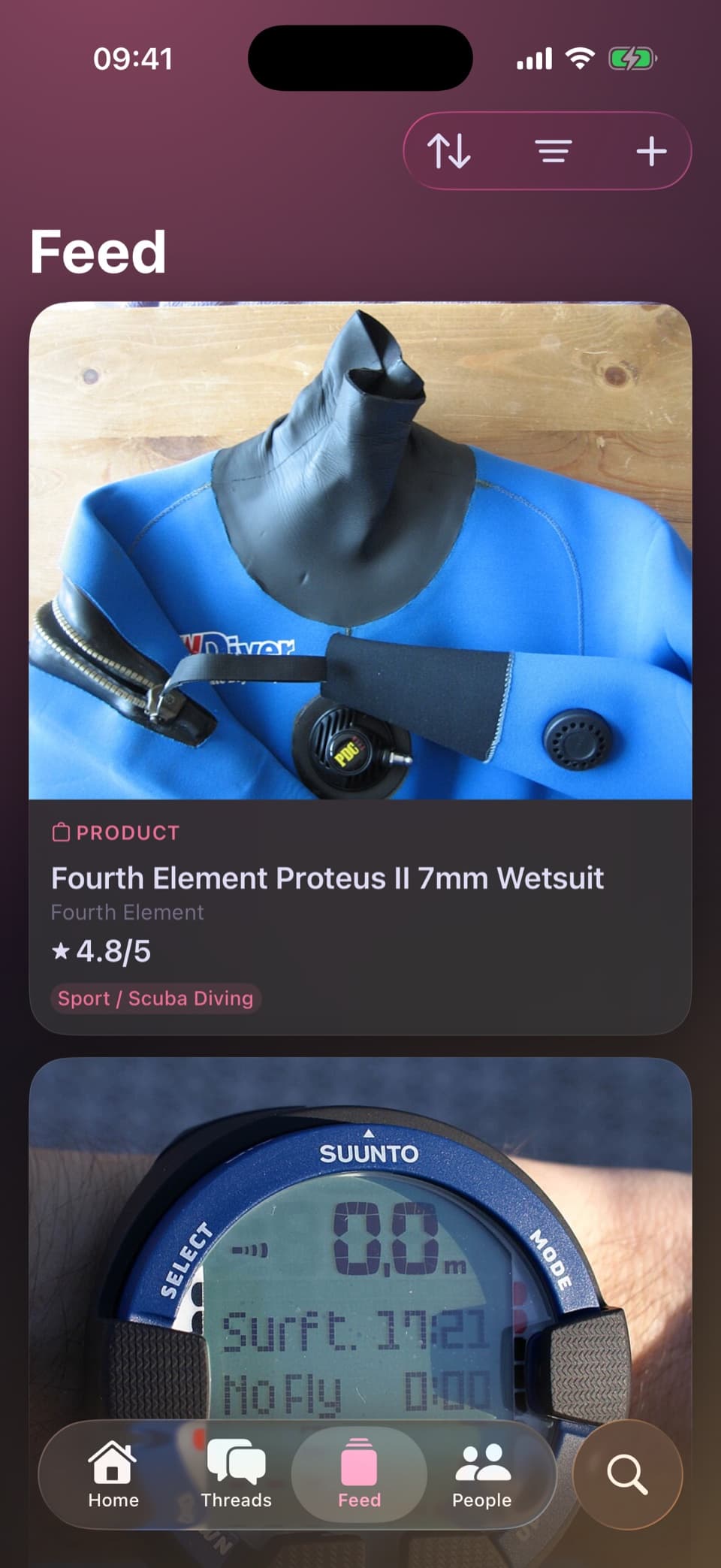
Omoi Station is a personal memory extension — not a bookmarking app, a read-it-later queue, or a productivity tool.
It is modelled on how memory actually works. You capture something in a second, and later it comes back to you: organised, connected, and explained, without your ever having filed it.
思い — a thought, a feeling, something held in mind.
Capture
Share it. That is the whole job.
Share a link, a screenshot, a video or a note from any app. The save is instant and works offline — it is written down before anything is fetched, so a bad connection can delay the detail but never lose the thing.
Omoi tells you what it worked out, including which app the save came from. It does not ask you to put it anywhere.
Promises
Floating Points, Pharoah Sanders & The LSO
Saved from Music. Filed into Records to find.

Identify
It works out what the thing is
A card appears the moment you save, at the size it will end up — then fills in as the app reads the page and recognises what it found. Nothing shifts under your thumb while it thinks.
- What it is
- An album
- What it is about
- music / jazz / spiritual jazz
- Why you saved it
- To listen
- Who is in it
- Floating Points · Pharoah Sanders
Recognition runs on your device. When it is not confident, the save lands in a plain Saved pile rather than being given a confident wrong answer — and you can correct anything it decided.
Saved instantly. Nothing has been fetched yet — but the card already knows how big it will be.
Enrich
Then it fills in everything around it
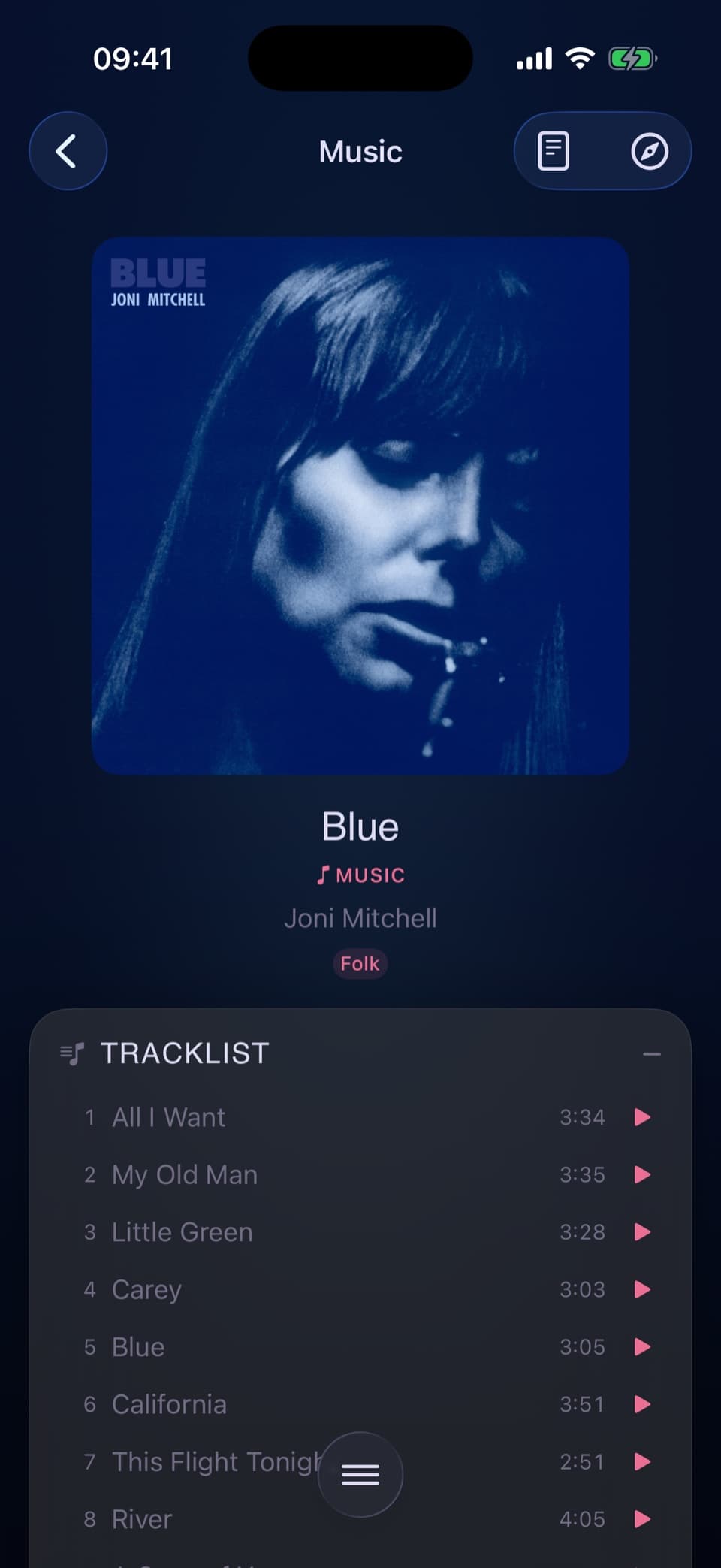
A link to an album becomes the album. Omoi goes and finds the detail that a URL does not carry, and leads with whatever matters for that kind of thing.
- MusicTracklists, credits and playable previews
- Series and filmSeasons, episodes and where to watch
- BooksEditions, covers and authors
- ProductsPrices and where to buy
- PlacesAddress, opening hours and the map
Enrichment runs in the background, when the phone is idle and on Wi-Fi. You never wait for it.
Threads
One idea to learn:
the thread
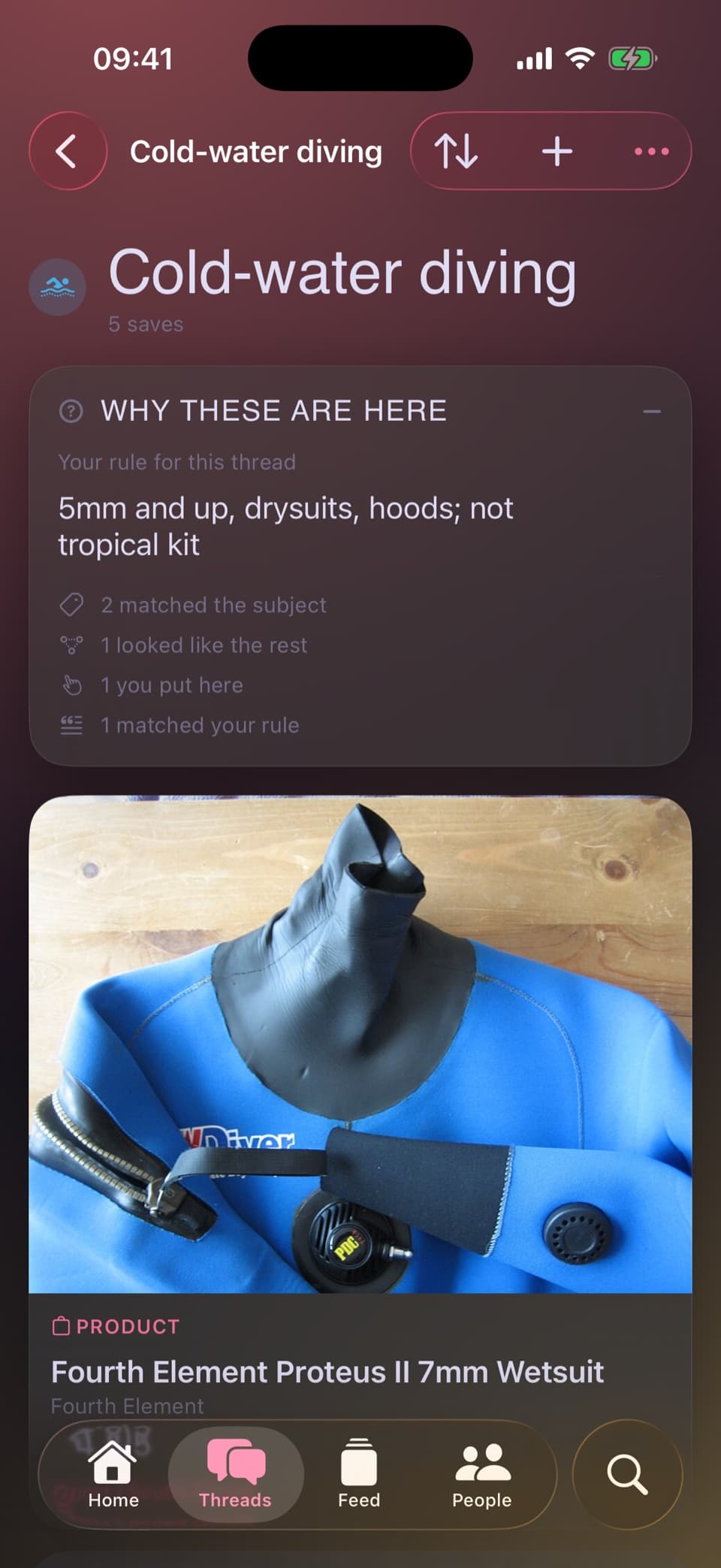
A thread is a running collection with a name you chose and a sentence saying what belongs in it. That sentence is what lets a thread draw a line no category can — cold-water scuba gear, not just scuba gear.
New saves file themselves against it. When one lands, the app says why in plain language and leaves an undo next to the explanation. It never asks first, and anything that does not match simply stays where it is.
There is no inbox to clear and no unread count, because nothing is waiting on you.
Resurface
And brings it back when it is useful
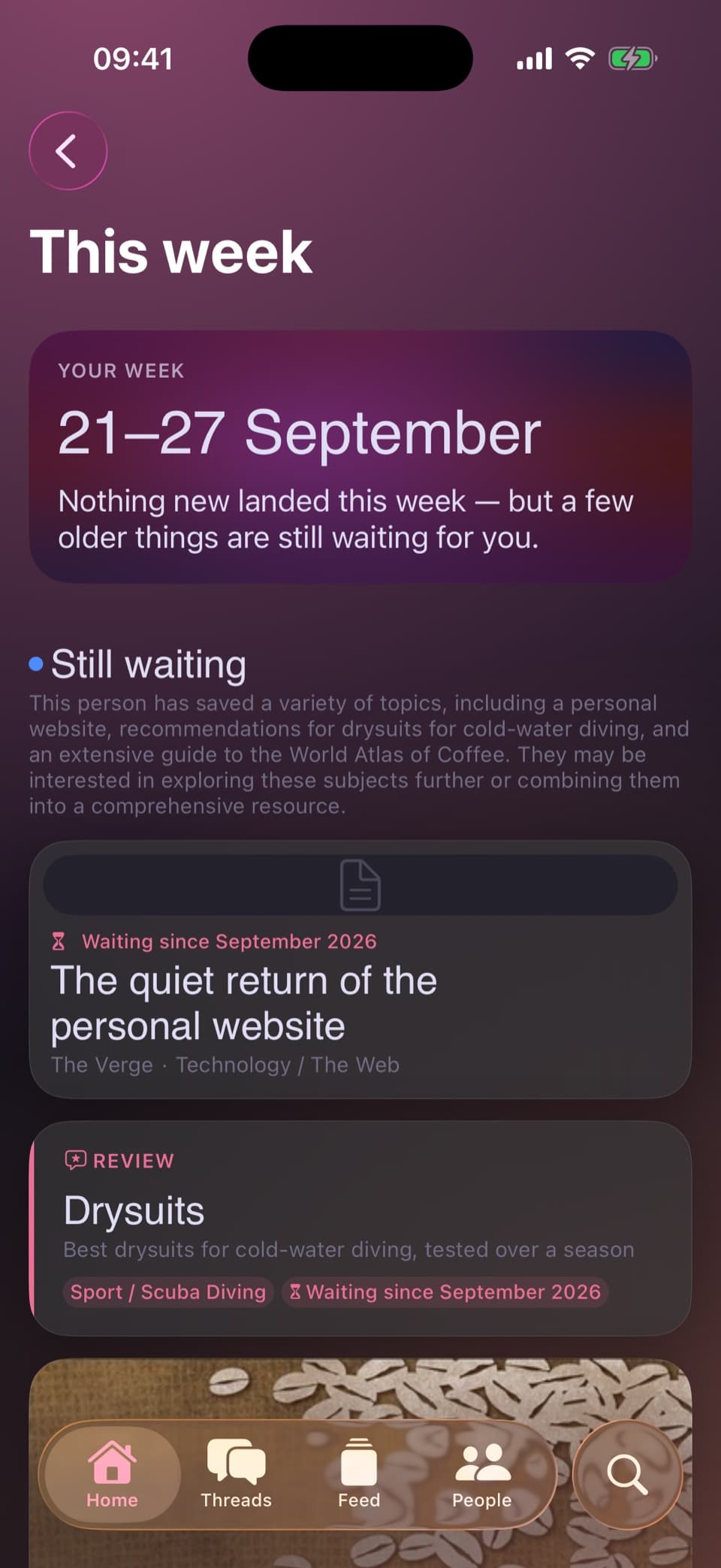
Once a week, a short written read: what you saved, what it added up to, and one or two older things you never opened. It is a page with an end, not a feed.
The rest of the time you can just ask. Search runs over your own library in plain language, and related saves sit alongside whatever you are looking at — each one able to say what it has in common with the thing in front of you.
The weekly reminder is optional, and it is a local notification. No push server is involved.
Private by design
The design goal is that Omoi never needs to see your data
No account, no server
There is nothing to sign up for and nowhere for us to keep your library. We could not read it if we wanted to.
Your saves, your iCloud
Everything lives on your device and mirrors to your own iCloud private database. If you are not signed into iCloud, it simply stays on the device.
Recognition on the device
Classification, search, text extraction and transcription run on your device using Apple's on-device frameworks.
No analytics, no tracking
No analytics SDK, no crash reporting service, no advertising identifier. We receive nothing about you or your use of the app.
The app does use the network, and the policy is specific about when. It fetches the pages you save, and looks up detail about them from services like Apple Music, MusicBrainz, Open Library and TVmaze — those services see the request and your IP address, as they would if you opened the page yourself, and are never told who you are.
You can optionally point classification at a third-party AI provider using your own API key, which does send the text of each save to them. It is off unless you turn it on.
Read the full privacy policyEvery claim on this page can be checked in the code
Omoi Station is open source under the MIT licence. You can read exactly what it sends and where, and build and run your own copy.